There is something oddly memorable about opening a letter before even reading it. The first thing anyone notices is not the words inside but the envelope itself. Funny enough, people spend hours writing a perfect message yet sometimes forget that the envelope quietly tells its own little story.
A thoughtfully made Envelope design almost whispers, “there’s something worth opening here.” Maybe that’s why invitations, business mail, thank-you notes, and holiday greetings all feel different before the seal is even broken. Its kinda amazing when you think about it.
Whether you’re preparing Business correspondence, sending heartfelt Personal correspondence, or creating unforgettable Wedding invitations, your envelope deserves just as much attention as the document inside. A beautiful envelope doesn’t happen by accident.
It comes from understanding the right Envelope layout, choosing suitable materials, following proper mailing standards, and adding design elements that feel natural rather than forced.
In this complete Envelope design guide, we’ll walk through every important detail from choosing the right size to assembling the finished envelope in a way that looks polished without feeling overdone.
| Topic | Details |
|---|---|
| Main Purpose | Create attractive and functional envelopes |
| Common Uses | Letters, invitations, business mail, cards |
| Key Elements | Size, layout, paper, typography, graphics |
| Popular Sizes | #10, DL, C4, C5, C6, A-2 |
| Design Focus | Branding, readability, visual appeal |
| Printing Options | Home printing and professional printing |
Why Envelope Design Matters More Than Most People Think
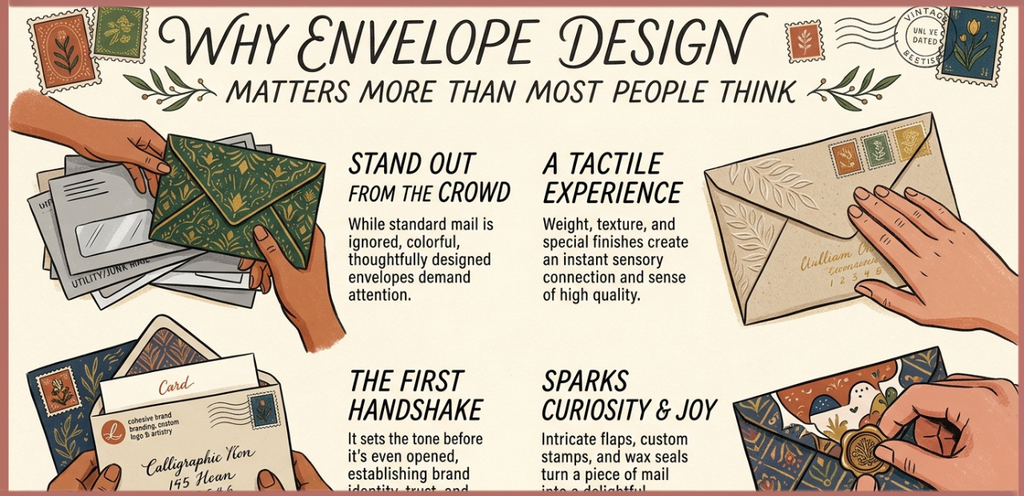
People often underestimate how powerful an envelope can be. Before anyone reads your Letters, Cards, Statements, Invoices, or Documents, they judge the package sitting in front of them. That first impression can influence how seriously the contents are taken, even if only for a few seconds.
Businesses use envelopes to strengthen Brand identity, while families use them to create excitement for birthdays, Baby announcements, anniversaries, and celebrations. A carefully planned envelope simply feels more respectful.
Good envelope design improves:
- Professional appearance
- Trustworthiness
- Brand recognition
- Mail presentation
- Customer engagement
- Personal connection
- Organization
In many ways, the envelope acts like the cover of a favorite book. People don’t always admit it, but covers matter.
Understanding Standard Envelope Sizes
Choosing the right size is the foundation of every successful project. Different documents require different envelopes, and using the wrong one can lead to folding issues or mailing problems.
Below are some of the most common Standard envelope sizes and Envelope dimensions used worldwide.
| Envelope Type | Best Used For |
|---|---|
| #10 envelope | Business letters and invoices |
| DL envelope | Folded A4 business letters |
| C4 envelope | Full A4 paper without folding |
| C5 envelope | Folded A4 documents |
| C6 envelope | Greeting cards and invitations |
| A-2 envelope | Small invitations and thank-you cards |
| Rectangle envelope | Everyday correspondence |
| Booklet envelope | Reports and catalogs |
| Catalog envelope | Large documents and promotional material |
Learning an Envelope size guide helps avoid unnecessary folding, damaged papers, or awkward spacing. Proper Envelope measurement also improves the overall appearance.
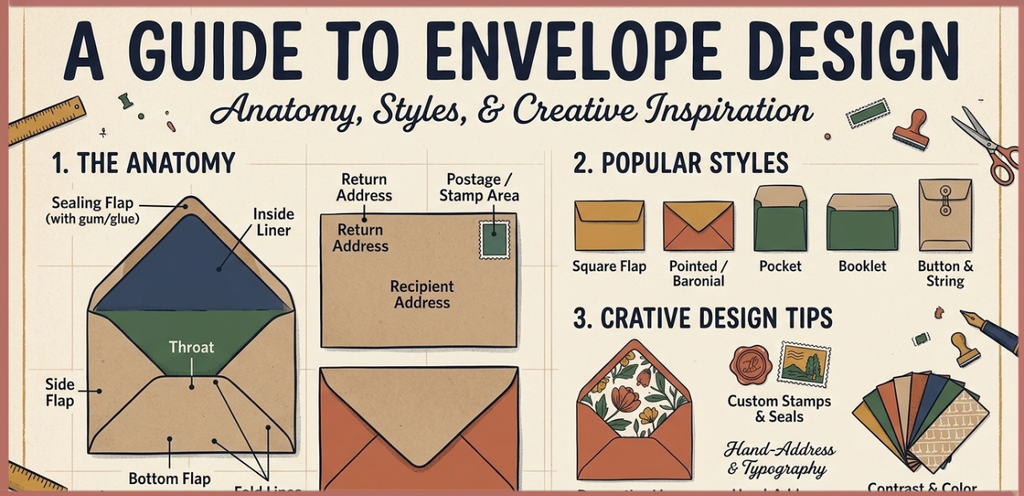
Envelope Styles and Formats
Not every envelope has the same personality. Different Envelope styles suit different occasions, and selecting the right one instantly changes the mood.
Some popular Envelope formats include:
- Contour flap envelope
- Triangular flap
- Square flap
- Wallet style
- Open-end style
- Side-opening style
A Contour flap envelope often feels elegant for formal invitations, while a Triangular flap creates a timeless appearance suitable for luxury stationery. Meanwhile, Booklet envelope and Catalog envelope options are practical choices for mailing thicker materials.
Understanding Envelope styles and sizes makes selecting the perfect option much easier.
Choosing the Right Paper
Paper isn’t just paper… well, not really.
The feel of an envelope immediately tells someone whether it was thoughtfully made or rushed together. Premium stationery creates confidence before the contents are even seen.
Popular choices include:
- 24 lb paper
- 28 lb paper
- 32 lb paper
- Textured paper
- Glossy paper
- Recycled paper
- Specialty paper
If sustainability matters to your organization, consider using FSC certified paper, Sustainable paper, or other Eco-friendly materials. Modern consumers increasingly appreciate environmentally responsible choices.
When selecting Paper stock, pay attention to:
- Paper weight
- Finish
- Texture
- Print compatibility
- Durability
A slightly heavier envelope often feels far more premium than standard office paper.
Typography Makes Every Envelope Easier to Read
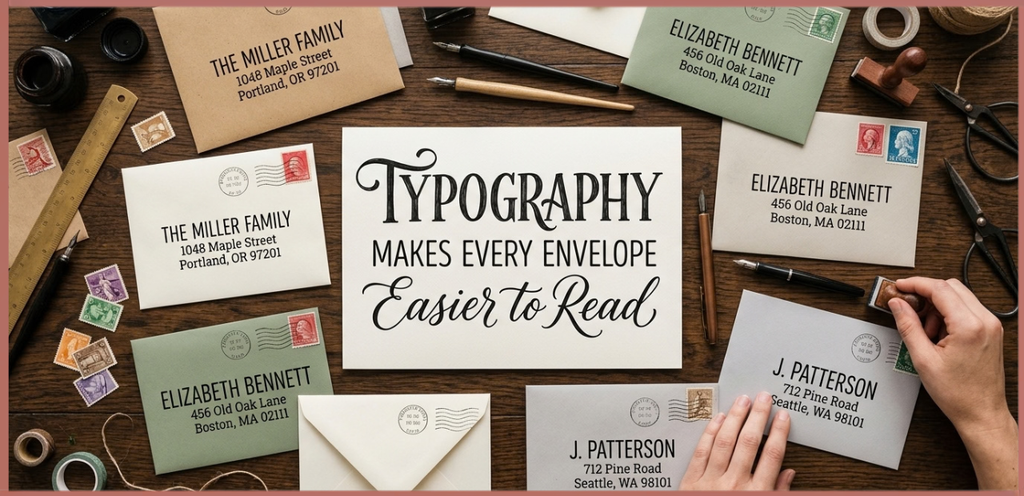
Great design isn’t always about decoration. Sometimes it’s simply about making information easier to find.
Clear Typography improves Readability, especially when mailing important business documents.
Consider using:
- Professional Fonts
- Simple Font styles
- Modern Digital fonts
- Elegant Handwriting
- High Color contrast
Avoid decorative fonts for addresses since Mail carrier systems rely on legibility. Fancy script might look beautiful, but it can occasionally confuse automated sorting machines.
Readable typography always wins.
Colors That Leave a Lasting Impression
Color changes emotion faster than almost anything else.
Soft creams feel traditional.
Bright colors feel playful.
Deep navy feels corporate.
When selecting Envelope colors, think about your audience instead of personal preference.
Coordinate:
- Background color
- Ink colors
- Brand palette
- Seasonal themes
For corporate mail, matching Brand colors strengthens recognition. Personal events like birthdays or Greeting cards allow much more creativity.
Graphic Elements That Bring Personality
Design doesn’t have to be loud.
Sometimes one elegant detail says more than an entire illustration.
Useful Graphic elements include:
- Logo
- Monogram
- Crest
- Custom illustration
- Floral graphics
- Borders
- Watermarks
Businesses often rely on Professional branding to reinforce recognition, while weddings frequently feature Calligraphy, floral artwork, and personalized initials.
Effective Envelope branding should complement—not overwhelm—the overall design.
Address Placement and Postal Requirements
One of the easiest mistakes to make is placing information incorrectly.
Every postal service expects addresses to appear in predictable locations.
A proper envelope should include:
- Recipient address
- Return address
- Postage placement
- Postage stamp
Following local Postal regulations, Postal guidelines, and Postal compliance reduces the risk of Delivery delays.
Different countries have unique standards.
Examples include:
- USPS envelope sizes
- UK envelope sizes
- European envelope sizes
Always double-check Address placement, Recipient address formatting, and Return address placement before mailing.
Tiny mistakes can travel surprisingly far.
Designing Business Envelopes
Professional communication depends heavily on consistency.
A company’s envelope should instantly reflect its identity without looking cluttered.
Important features include:
- Company Logo
- Consistent Brand identity
- Corporate Branding
- Professional typography
- Minimal graphics
- Balanced layout
Many businesses integrate their envelopes with broader Corporate stationery, improving Professional communication across invoices, contracts, and proposals.
Strong Business identity begins with consistent visual presentation.
Designing Personal Envelopes
Personal mail gives far more creative freedom.
Whether sending Greeting cards, holiday mail, Wedding invitations, or birthday notes, envelopes can become part of the gift itself.
Ideas include:
- Handwritten names
- Decorative wax seals
- Floral illustrations
- Watercolor artwork
- Seasonal themes
- Personalized monograms
Beautiful Personal communication often begins long before the envelope is opened.
Printing Your Envelope
Printing methods vary depending on budget and quantity.
For smaller projects, a Home printer works surprisingly well. Larger orders usually benefit from Professional printing or specialized Printing services.
Compare both approaches.
| Method | Best For |
|---|---|
| Home Printer | Small batches |
| Professional Printing | Large quantities |
| Commercial Printing | Corporate projects |
When printing, monitor:
- Printing quality
- Print alignment
- Color accuracy
- Edge margins
Poor alignment can make even beautiful artwork appear careless.
Custom Envelope Design Software
Today’s software has simplified envelope creation dramatically.
Applications like Swift Publisher provide useful Design templates, Layout tools, Typography tools, and Graphic design tools for beginners and professionals alike.
Helpful features include:
- Drag-and-drop editor
- Custom sizing
- Built-in graphics
- Print-ready exports
- Easy customization
Creating a Custom design no longer requires years of graphic design experience.
Envelope Assembly Made Simple
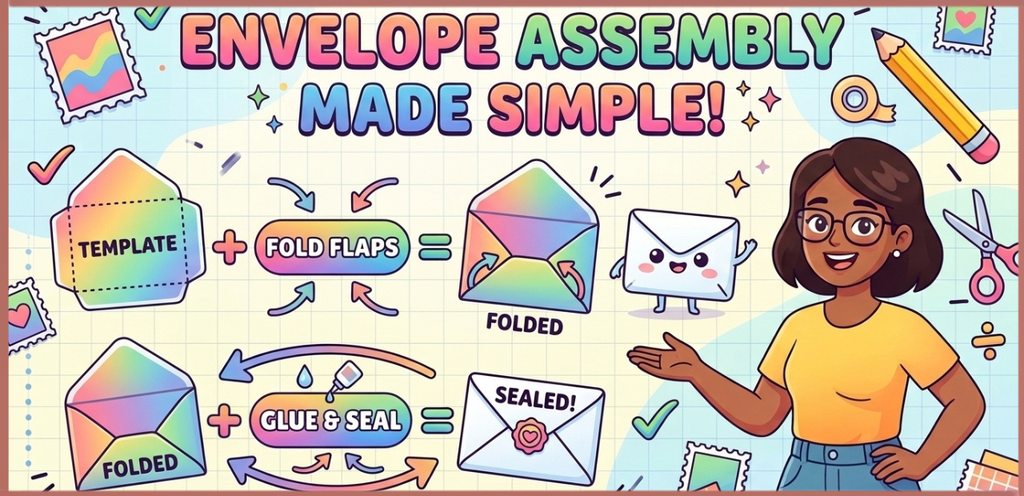
After printing comes construction.
Proper Envelope assembly helps everything fit securely without wrinkles or uneven folds.
Basic supplies include:
- Double-sided tape
- Glue stick
- Bone folder
- Scissors
- Ruler
Pay attention to:
- Fold line
- Flap
- Insert placement
Proper Insert alignment prevents documents from catching when the recipient opens the envelope.
Choosing the Right Inserts
Every envelope has a purpose.
Some contain contracts.
Others carry celebration.
Selecting appropriate Inserts depends on the occasion.
Examples include:
- Business proposals
- Certificates
- Greeting cards
- Event tickets
- Product catalogs
- Coupons
- Thank-you letters
Avoid overstuffing. Thick envelopes may require additional postage.
Sustainable Envelope Design
Environmental awareness has become an important design consideration.
Many organizations now prefer:
- Recycled paper
- Sustainable paper
- Eco-friendly envelopes
- Recycled envelopes
- Sustainable envelopes
Using FSC certified paper demonstrates responsibility while maintaining excellent print quality.
Even small material choices can reduce environmental impact over time.
Creative Envelope Ideas
If you want your mail to stand out naturally, consider experimenting with modern design concepts.
Popular ideas include:
- Minimal envelope design
- Modern envelope design
- Professional envelope design
- Gold foil accents
- Blind embossing
- Patterned interiors
- Illustrated liners
Creative doesn’t always mean complicated. Sometimes removing unnecessary decoration creates the strongest impression.
Common Mistakes to Avoid
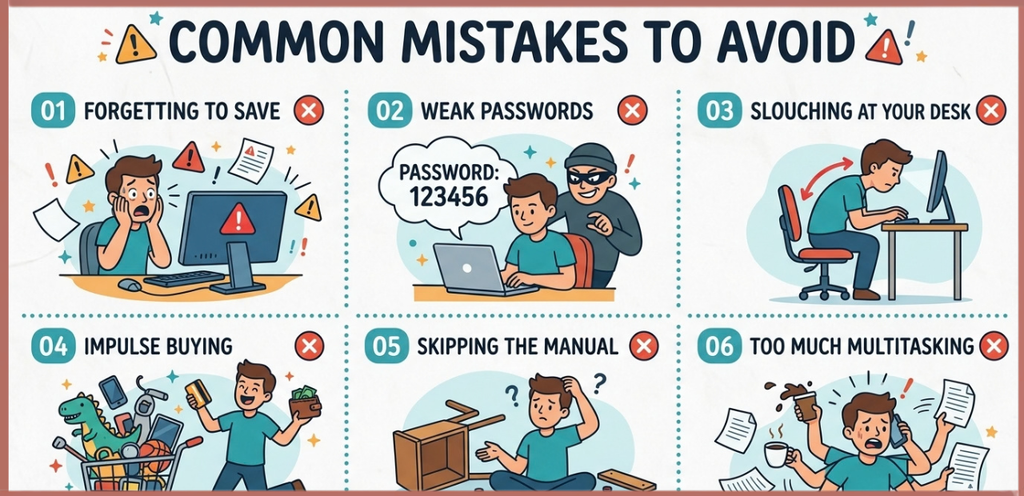
Even experienced designers occasionally overlook simple details.
Watch out for:
- Poor Envelope layout
- Incorrect sizing
- Low Readability
- Weak color contrast
- Cheap paper quality
- Incorrect postage
- Misaligned addresses
- Low-resolution graphics
A quick review before printing usually catches these problems.
Best Practices for Professional Envelope Design
Successful envelopes balance beauty with practicality.
Keep these principles in mind:
- Prioritize readability
- Maintain design consistency
- Follow mailing standards
- Use quality materials
- Keep branding subtle
- Leave adequate margins
- Test-print before mass production
Good design rarely screams for attention. It quietly earns it.
Frequently Asked Question
business envelope design
Business envelope design focuses on creating professional-looking envelopes that represent a company’s brand, including logos, colors, and clear address placement.
envelope designer
An envelope designer is a person or software tool that helps create customized envelope layouts with text, graphics, branding, and printing options.
sizes of envelopes
Envelope sizes vary depending on their purpose, from standard business envelopes like #10 and DL to larger options for documents, catalogs, and invitations.
different envelope sizes
Different envelope sizes are designed for specific needs, including letters, cards, business mailings, brochures, and folded documents.
professional envelope design
Professional envelope design combines attractive visuals, readable typography, proper formatting, and branding elements to create a polished mailing experience.
Read this blog https://avenzorixy.com/types-of-envelopes-2/
Final Thoughts
Designing an envelope might seem like a tiny task, yet it quietly influences how every message is received. Whether you’re creating Custom envelopes, Branded envelopes, elegant Invitation envelope designs, or practical Business envelope solutions, every decision from Paper selection and Envelope printing to Professional logo placement and Mailing address format adds another layer to the experience. Thats what makes envelope design strangely satisfying.
The next time you prepare a piece of mail, don’t rush straight to what’s inside. Spend a little extra time on the envelope itself. Experiment with textures, colors, layouts, and thoughtful details.
Ask friends or colleagues what catches their eye, compare different Envelope templates, and test new ideas until you discover a style that feels unmistakably yours.
After all, the journey of every memorable message begins long before the first word is read it begins with an envelope that quietly says, “This was made with care.”